The Flask Journal / Cocktail culture
How the Old Fashioned got old
The most confident name on the cocktail menu began with a very human request: could you make it the old way?
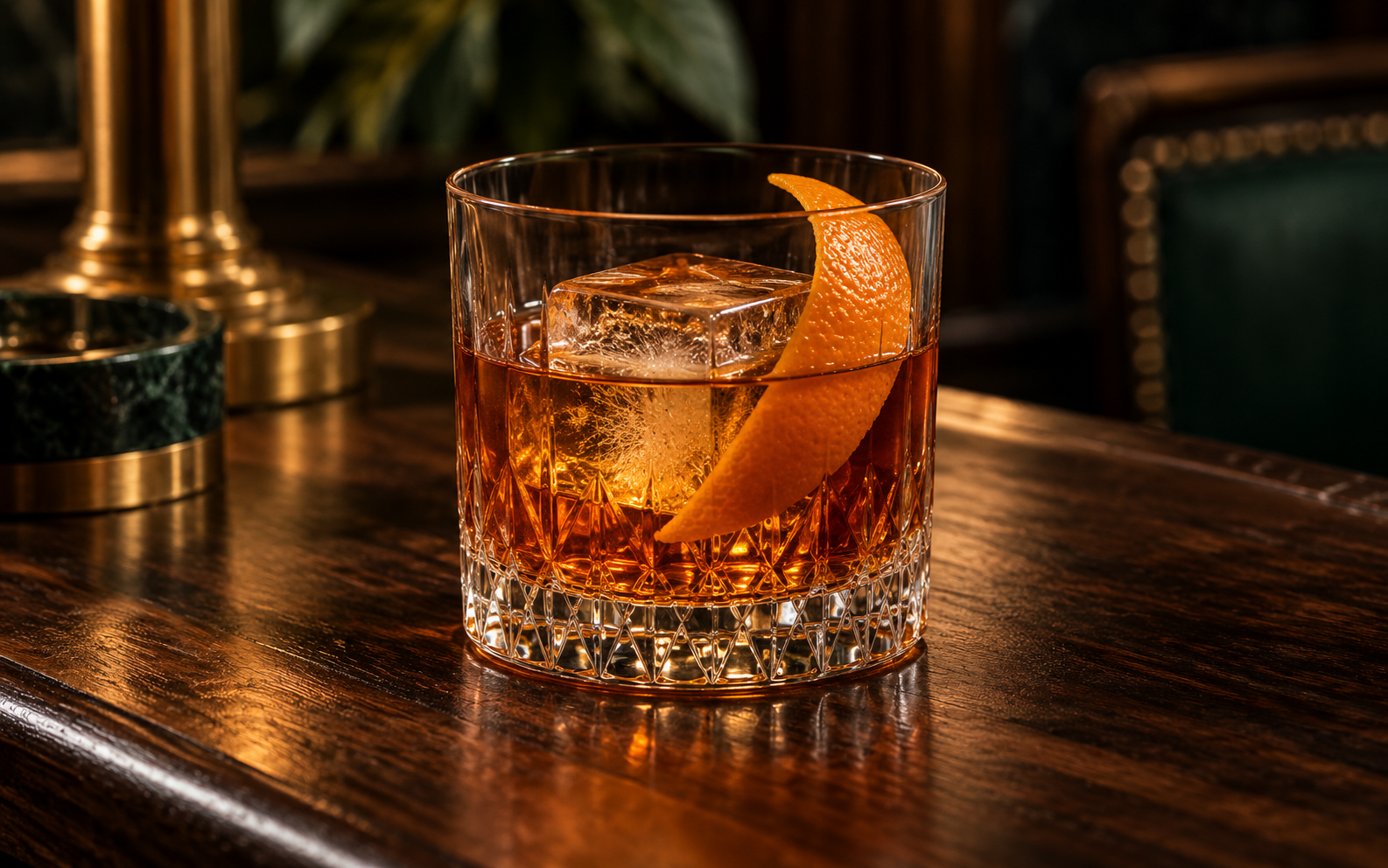
“Old Fashioned” is a peculiar name for something people keep ordering in new bars. It announces that the drink has already survived at least one round of fashion and would prefer not to discuss the matter further. There is confidence in that. There is also a story hidden in the adjective: old-fashioned compared with what?
To find the answer, go back before the modern name. In May 1806, The Balance and Columbian Repository printed a definition of a cocktail built around spirits, sugar, water, and bitters. Difford's Guide traces the drink's history through that formulation. It is recognizable as an ancestor of today's Old Fashioned, but the newspaper entry is not a birth certificate for the modern named drink. 1
The name makes more sense once cocktail-making grows more elaborate. With new ingredients and styles available, asking for an older preparation becomes a meaningful request. The familiar formula acquires an identity because other possibilities have appeared around it. 1 It is the drinks equivalent of asking someone to leave a favorite song's arrangement alone.
A family tree with disputed branches
The search for one inventor makes this story harder than it needs to be. Louisville's Pendennis Club has a famous place in the lore, but the historical dates and different versions complicate the claim that one person created everything we now call an Old Fashioned. Difford's account distinguishes the earlier drink from later fruit-heavy interpretations. 2
That distinction is useful at the bar. Two people can use the same name while picturing noticeably different drinks. One expects whiskey, a modest amount of sweetness, bitters, and an orange twist. Another has a particular fruit preparation or regional tradition in mind. Declaring one person's memory imaginary will not improve the conversation.
Instead, watch what each ingredient is doing. The spirit supplies the base. Sweetness changes its balance. Bitters add concentrated aromatic detail. Water matters too, whether it is added directly or arrives as the ice melts. The IBA recipe makes those roles especially easy to see. 3
That stripped-back structure is also why changing the whiskey or sweetener can be revealing. There is comparatively little else in the glass to distract you. A variation does not need a dozen additions to announce itself; sometimes one careful change is enough.
The Old Fashioned's appeal is therefore more generous than its stern name suggests. It offers a recognizable starting point, with room for the person making it and the person ordering it. Its history is not a single frozen moment. It is a long conversation about which parts of a good thing are worth keeping.
Bar-stool FYI. The 1806 definition described a cocktail formula. It did not announce the invention of a drink already called the Old Fashioned. 1
From the story to the shaker
The cocktail detour
Published recipes from other bartenders and producers. These are editorial picks, not a ranked popularity list or historical remedies.
- Old Fashioned ↗The familiar starting point: whiskey, sugar, bitters, and water.
- Oaxaca Old Fashioned ↗An agave-based variation; see the linked recipe for its specific proportions.
- Boulevardier ↗A useful contrast: whiskey with vermouth and a bitter aperitif.