The Flask Journal / Spirit stories
Gin, scandal & the city
Before gin got a balloon glass and a botanical garnish, London gave it a starring role in a moral panic.
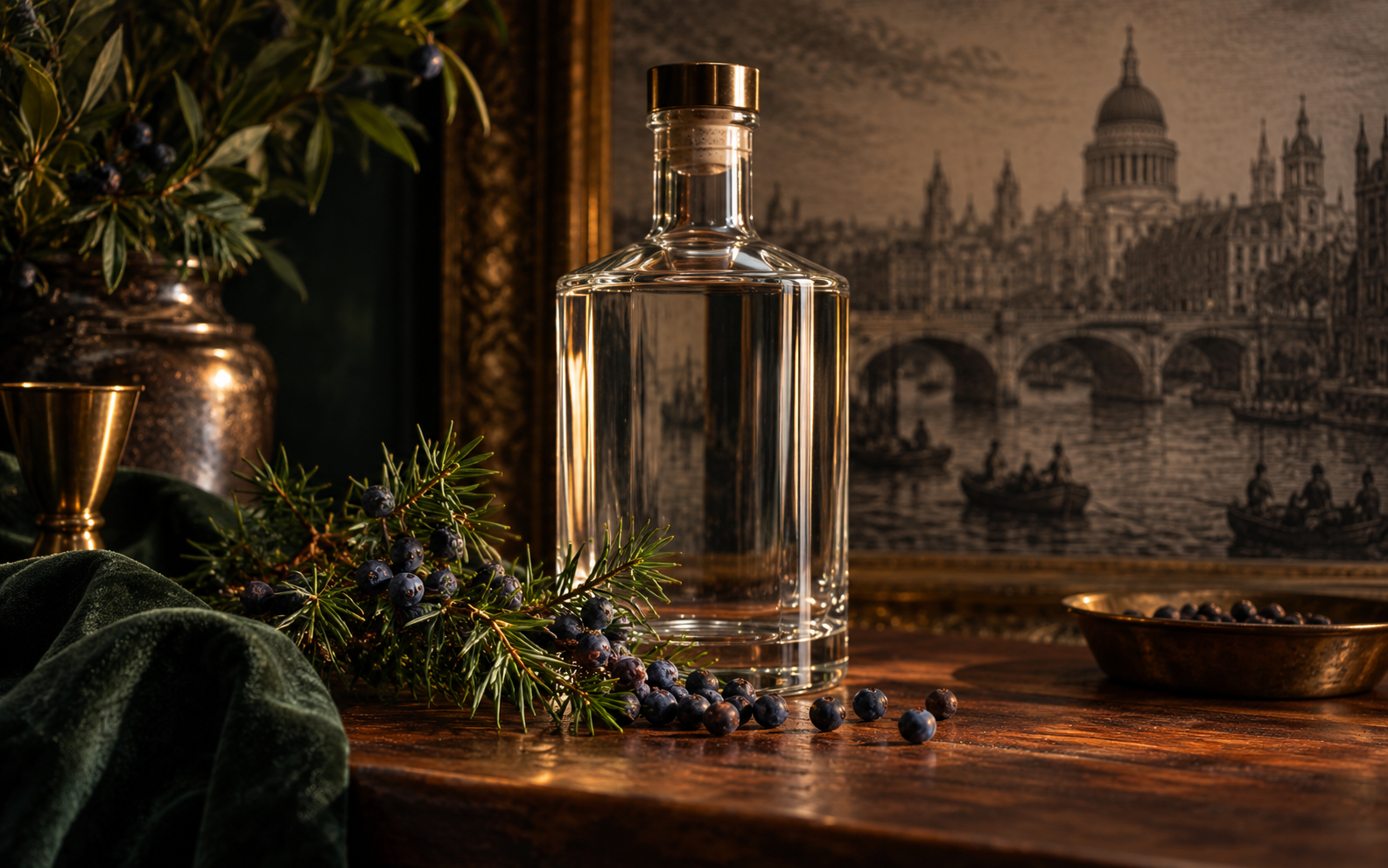
The gin in a modern cocktail photograph usually looks exceptionally well behaved. Clear glass. Precise ice. Perhaps a rosemary sprig standing at attention. Put that image beside William Hogarth's Gin Lane and you get one of the drinks world's more dramatic changes of wardrobe.
Published in 1751, Gin Lane is an argument in picture form. Its companion, Beer Street, offers a deliberate contrast. London Museum describes the gin print as propaganda rather than a straightforward record of an actual street. The chaos was meant to persuade. 1 This was a campaign with a very memorable visual identity, long before anyone could share it from a phone.
There were real harms behind the image. In early eighteenth-century London, cheap gin became widely accessible, and dangerous drinking intensified among poorer residents. Trade policy, the price of spirits, and taxes on beer helped shape the market. The museum also points to the class prejudice woven into the response. 1
The drink became the argument
That mixture is what makes the story more interesting than “London drank too much gin.” A bottle could stand in for anxieties about poverty, labor, family life, and the behavior of people with little political power. Condemning a drink was also a way of condemning its drinkers.
Look again at the two prints. Their power comes from the contrast: one drink belongs to a reassuring world, the other to a world falling apart. A modern viewer can recognize the technique immediately. We still know how to make one object carry a whole argument about who is respectable and who is ruining everything.
The ending is less tidy than the campaign imagery. Historical evidence submitted to Parliament notes that consumption was already falling before the 1751 legislation, with grain prices and declining incomes among the influences. Regulation mattered, but “one law fixed it” gives a complicated economic story an implausibly neat final scene. 2
There is a useful surprise here for anyone who thinks drinks history is just a parade of charming inventors. Sometimes the most revealing artifact is an angry image. It shows what people feared, who they blamed, and how they hoped to change other people's behavior.
Gin eventually acquired other costumes, including the polished cocktail-bar version we recognize today. The eighteenth-century prints remain a reminder that a spirit's reputation can change far more dramatically than its place on a shelf. The rosemary sprig is only the latest chapter.
Bar-stool FYI. Gin Lane and Beer Street were companions. Comparing them reveals the argument far better than looking at the gin print alone. 1
From the story to the shaker
The cocktail detour
Published recipes from other bartenders and producers. These are editorial picks, not a ranked popularity list or historical remedies.
- Negroni ↗Gin, bitter Campari, and sweet vermouth share the stage.
- Bramble ↗Gin and lemon with a blackberry-liqueur finish.
- Corpse Reviver No. 2 ↗A wonderfully theatrical name; no medicinal powers implied.