The Flask Journal / History
Behind the speakeasy door
Secret entrances make great theater. The story behind them is stranger, messier, and much more interesting.
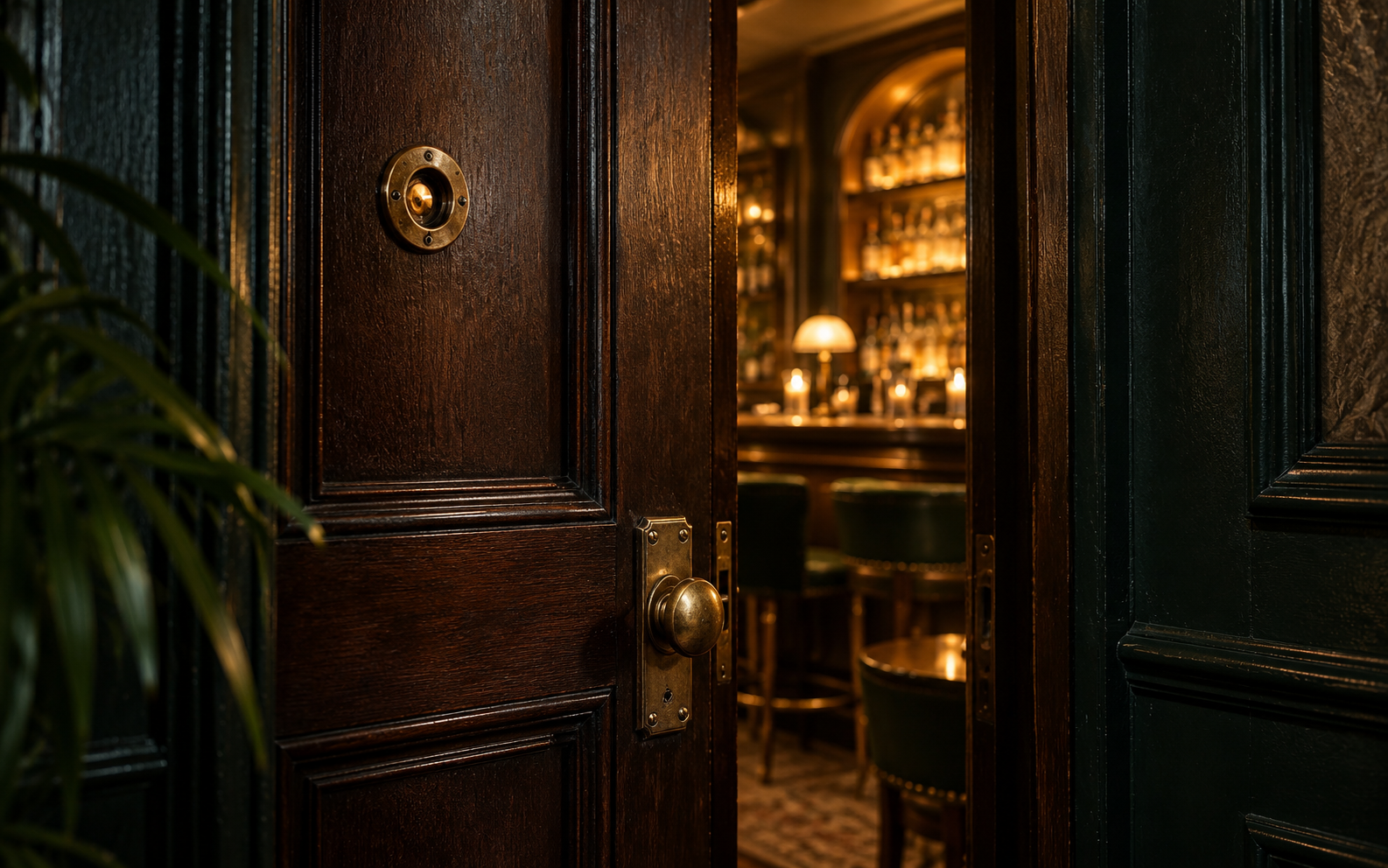
A bookshelf swings open. A low lamp catches the edge of a glass. Somewhere, someone has decided that finding the bar should feel like solving a small crime. The modern speakeasy has perfected the entrance. Its historical inspiration had a more pressing design problem: how to keep doing business when the business was illegal.
National Prohibition began in 1920, after ratification of the Eighteenth Amendment in 1919. The wording matters. It targeted the manufacture, sale, transportation, import, and export of intoxicating liquor for beverage purposes; it was not simply a constitutional sentence saying nobody could take a drink. The Volstead Act supplied the machinery for enforcement. 1
That distinction helps explain why the period produced more than boarded-up saloons. Demand could continue even when ordinary legal supply disappeared. The Smithsonian's account of bootlegging follows the resulting illicit business and the fortunes made around it. A secret bar was one visible corner of a much larger system of production and distribution. 2
Before the password, there was a campaign
It is tempting to cast Prohibition as one spectacularly unpopular rule dropped onto a nation having a good time. Its supporters saw something very different. Temperance campaigning had developed over decades, with concerns about family income, domestic harm, working conditions, and public morality. The National Archives traces the organizing behind the eventual constitutional change. 1
That does not make every argument convincing or every outcome admirable. It makes the history human. Some people believed a national ban could solve problems they saw every day. Others found new opportunities in evading it. The glamorous doorway tells only the second story, and usually the most photogenic part.
The practical differences between a modern themed lounge and an illegal establishment are enormous. Today, a hidden entrance can be advertised on social media. During Prohibition, concealment could be part of avoiding enforcement. Our version sells the pleasure of being in on a secret. The historical version involved actual uncertainty about who might come through the door next.
National constitutional Prohibition ended with ratification of the Twenty-first Amendment on December 5, 1933. State and local restrictions did not all vanish with it. The country had changed the national rule, not agreed on one permanent answer to every question about alcohol. 3
So enjoy the sliding bookshelf. It is a lovely bit of theater. Just imagine the story extending beyond the velvet curtain: campaigners, suppliers, officials, customers, and a country arguing about what law could accomplish. The password gets you inside. That argument is what makes the room interesting.
Bar-stool FYI. Repeal has a date: December 5, 1933. It ended the national constitutional ban, not every local restriction. 3
From the story to the shaker
The cocktail detour
Published recipes from other bartenders and producers. These are editorial picks, not a ranked popularity list or historical remedies.
- Old Fashioned ↗The familiar starting point: whiskey, sugar, bitters, and water.
- Negroni ↗Gin, bitter Campari, and sweet vermouth share the stage.
- Sidecar ↗Cognac, orange liqueur, and lemon: bright rather than sleepy.